


Employee Loyalty in Asia vs Australia: Key Differences
30 April, 2026
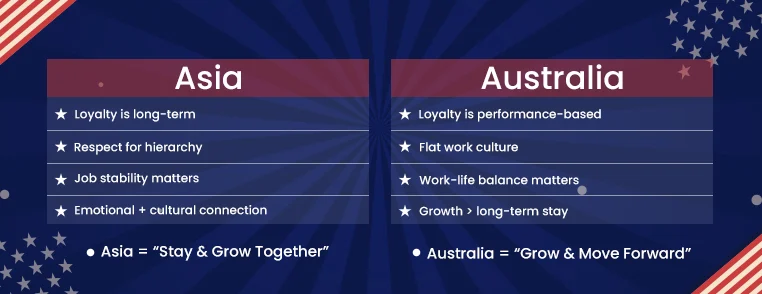
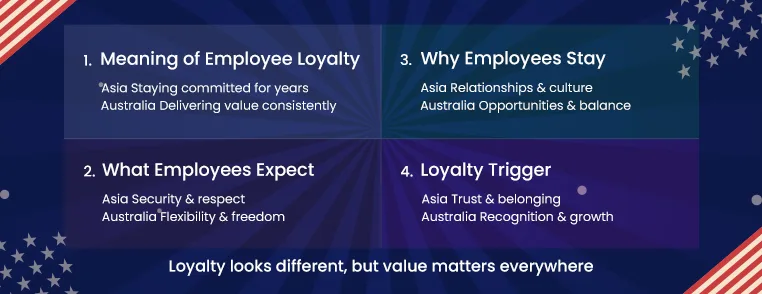
Employee loyalty plays a critical role in business success. It impacts retention, productivity, workplace culture, and long-term growth. Understanding the importance of employee loyalty helps organizations build stronger teams and long-term value. However, loyalty is not the same everywhere. Employee loyalty refers to an employee’s commitment, trust, and willingness to stay and grow with an organization. It is not just about how long someone stays, it’s about engagement, contribution, and belief in the company’s vision. Strong loyalty leads to better performance, lower turnover, and improved workplace culture. Read more - What is an Employee Loyalty Program? Benefits & Uses Employee Loyalty in Asia is traditionally built on stability, respect, and long-term association. - Strong focus on long-term employment - Deep respect for hierarchy and seniority - Emotional attachment to the organization - Preference for job security over risk - Builds a strong organizational culture - Reduces hiring and training costs - Creates long-term workforce stability In Australia, employee loyalty is more dynamic and experience-driven rather than tenure-based. - Focus on career growth and opportunities - Preference for work-life balance - Open communication and flat hierarchies - Loyalty depends on employee experience - Asia: Built on long-term commitment, stability, and cultural values - Australia: Built on growth, fairness, and employee experience Read more - Top 20 Restaurant Loyalty Programs in Asia - Asia: Employees tend to stay longer in one company - Australia: Employees are more open to changing jobs for better opportunities - Asia: 1. Hierarchical structures 2. Top-down decision-making 3. Limited challenge to authority - Australia: 1. Flat structures 2. Collaborative decision-making 3. Encouragement of employee voice - Asia: 1. Traditionally, long working hours 2. Always-on mindset in many roles 3. Slowly evolving toward balance - Australia: 1. Strong work-life balance culture 2. Clear boundaries after work hours 3. Focus on mental well-being - Asia: 1. Tenure-based rewards 2. Team-oriented recognition 3. Loyalty is linked to years of service - Australia: 1. Performance-based rewards 2. Individual recognition 3. Growth and skill development focus - Asia: Generally higher due to cultural and economic factors - Australia: Moderate but supported by higher job satisfaction Employees in Australia may feel connected to their organization but are still willing to leave if: - Growth opportunities are limited - Compensation is not competitive - Work-life balance is affected This highlights why organizations must actively invest in employee loyalty programs to retain talent. The importance of employee loyalty goes beyond retention. It directly impacts business growth. - Higher productivity and performance - Lower employee turnover - Stronger team collaboration - Better customer experience - Improved brand reputation - These benefits of loyal employees make loyalty a key business priority. Read more - Top 5 Hotel loyalty programs for employees in Africa A well-designed employee loyalty program rewards both performance and commitment. Provide learning, career development, and upskilling opportunities. Transparency builds trust and long-term commitment. Balance performance-based and tenure-based recognition. Respect personal time and avoid burnout. Employee loyalty is no longer just about staying with a company for years. - In Asia, loyalty has been traditionally driven by stability and culture - In Australia, loyalty is driven by experience, growth, and flexibility Today, businesses must combine both approaches to create meaningful and lasting loyalty. 1. What does employee loyalty mean? Employee loyalty refers to an employee’s commitment, trust, and long-term association with an organization. 2. What is an employee loyalty program? An employee loyalty program is a structured system that rewards employees to improve engagement and retention. 3. What are the benefits of loyal employees? Loyal employees improve productivity, reduce hiring costs, and strengthen company culture. 4. How to improve employee loyalty? Focus on employee experience, growth, recognition, communication, and work-life balance.What is Employee Loyalty?
What is Employee Loyalty in Asia?
Key Characteristics
Importance of Employee Loyalty in Asia
Employee Loyalty in Australia
Key Characteristics
Key Differences in Employee Loyalty
1. Basis of Loyalty
2. Job Switching Behavior
3. Hierarchy vs Autonomy
4. Work-Life Balance
5. Recognition & Rewards
6. Employee Loyalty Index Trend
The “Loyalty Paradox” in Australia
What is the Importance of Employee Loyalty?
Benefits of Loyal Employees
How to Improve Employee Loyalty?
1. Build Strong Employee Loyalty Programs
2. Focus on Growth
3. Encourage Open Communication
4. Recognize and Reward
5. Support Work-Life Balance
Conclusion
FAQs